Merger and Acquisition Strategies

From Growth Gap Analysis to Board-Ready M&A Strategy Report

This course builds the strategic foundation required to understand how corporate development teams design, justify, and execute M&A strategy. It explains the frameworks for quantifying growth gaps, designing investment themes, and building acquisition strategy, so you can contribute to strategic planning with clarity, rigor, and discipline.

This course fits within the "5-step M&A Transaction & PMI Strategy" curriculum as follows:
M&A Step 1
─── 1-1. Merger and Acquisition Process in Practice
─── 1-2. Developing Effective M&A Strategy ☜ this course
M&A Step 2
─── 2-1. M&A Deal Sourcing & Pipeline Management
─── 2-2. Desktop Due Diligence & Quick Valuation
● M&A Step 3
─── 3-1. Full Due Diligence (CDD, FDD, LDD, HRDD, and more)
─── 3-2. Investment Valuation (separate course)
─── 3-3. Acquisition Finance and Leveraged Buyout
● M&A Step 4
─── 4-1. M&A Deal Negotiation Skills
─── 4-2. Pricing Mechanisms and Stock Purchase Agreement Drafting
● M&A Step 5
─── 5. Post-Merger Integration & Value Creation

 Course Highlights
● 56 learning modules across 25 lessons in 6 sections to build strategic M&A planning capability
● Follow a scientific learning cycle: Practical Theory → Quiz → Case Study → AI Strategy Report
● Develop strategic judgment through frameworks, feedback, and applied decision-making
● Learn how professional teams design an M&A strategy from context to execution
 
Course Level
Beginner to Intermediate
 
Prerequisites
None required

What You Will Achieve
Quantify growth gaps across revenue, EBITDA, and FCF to justify M&A strategy
● Master build vs. buy assessments using capability gaps and asset specificity thresholds
● Design 2~3 investment themes aligned to deal archetypes and synergy blueprints
Construct target screening criteria with financial guardrails and exclusion mandates
● Convert acquisition strategy into executable 30-60-90 day sourcing roadmaps
● Build board-ready M&A planning documents that survive executive scrutiny

Final Deliverables (Templates)
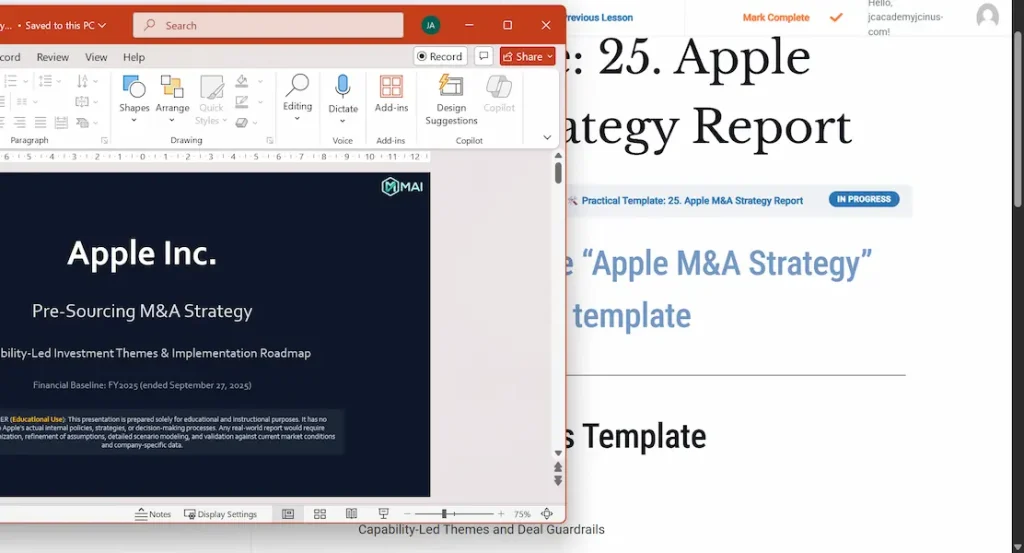
Apple M&A Strategy Report

AI-Powered Report Assignment
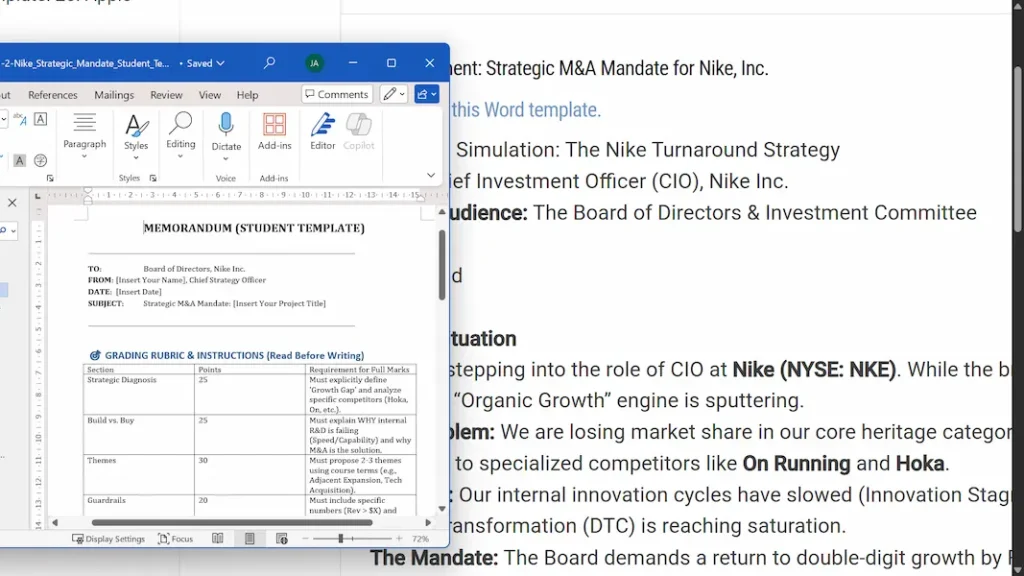
Nike Strategic M&A Strategic Memo
 
Who Should Take This Course?
Corporate development professionals | Strategy and finance executives | M&A planning teams | PE/VC investment professionals | Consultants advising on acquisition strategy | MBA students and career changers entering strategic roles
 
Duration
Complete the merger and acquisition process course within 3 months
● 25 Lessons with 51 learning modules + quizzes and applied case studies
● Each module designed for 20~30 minutes of focused study
● Total learning time: approximately 17~25 hours

Original price was: $199.9.Current price is: $79.9.
-
D
-
H
-
M
-
S
Category:

Course Structure & Learning Flow

A Practical Learning Built for Real Decision-Making

This course transforms merger and acquisition strategies from abstract boardroom concepts into executable frameworks you can deploy immediately.
We've distilled strategic planning methodologies used by Goldman Sachs, McKinsey, and leading corporate development teams into a streamlined curriculum that mirrors how professionals actually build the strategy.
5-Stage Learning Cycle: Strategic Framework Introduction → Retention Quizzes → Real-World Deal Analysis → Template Deconstruction → AI-Driven Report Writing
You will develop the strategic judgment required to quantify growth gaps, design investment themes, and build board-ready acquisition strategy that survive executive scrutiny.
m&a courses

How the Course Is Structured

6 sections → 25 lessons → 51 structured learning modules
Quizzes after every lesson to reinforce practical decision-making
Each module designed for 20~30 min including quiz & applied cases
Unlimited access for 3 months across desktop, tablet, and mobile
online m&a course icon

Differentiated Learning Materials

Visually structured written content optimized for fast comprehension
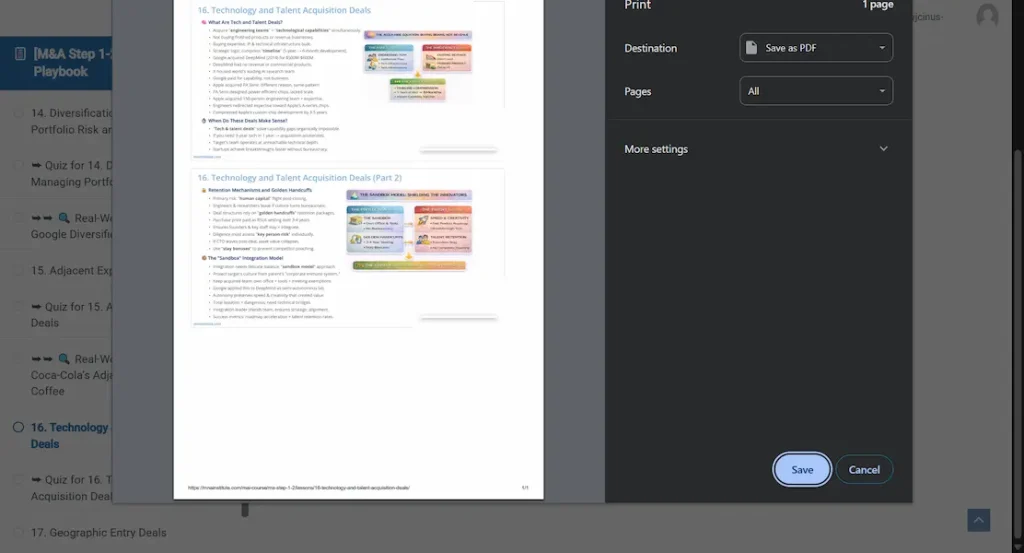
All lessons downloadable and printable in PDF format
Real-world case studies reflecting actual M&A strategy execution
Apple M&A Strategy Template used by corp. development teams

Applied AI Report Writing

Write a board-ready M&A strategy memo applying frameworks from all 6 sections
Analyze Nike's growth gap using real financials and competitors
Refine your M&A planning intuition through our AI-powered real-time feedback on your report

The M&A Institute Learning Interface

Learning Complex M&A Made Effortless
m&a institute learning interface

Our learning UI/UX is engineered to transform complex technical data into intuitive strategic judgment.

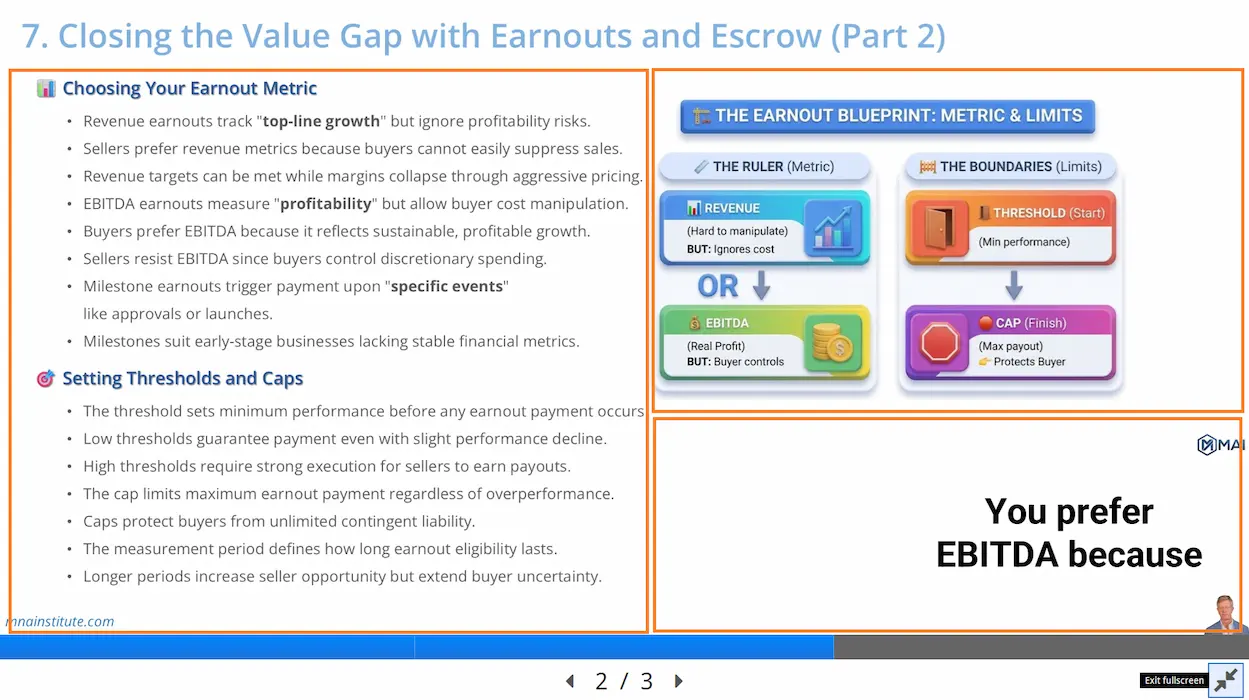
  1. Scientifically Designed Three-Layer Interface
    Every lesson follows a three-layer learning structure designed to help learners understand complex concepts quickly and intuitively.

    # Left Panel: Structured Written Content
    Carefully edited bullet points guide you through each concept with clarity. Even reading the text alone ensures full comprehension. As the audio plays, your eyes naturally follow along, reinforcing understanding through synchronized reading and listening.

    # Right Panel: Visual Infographics
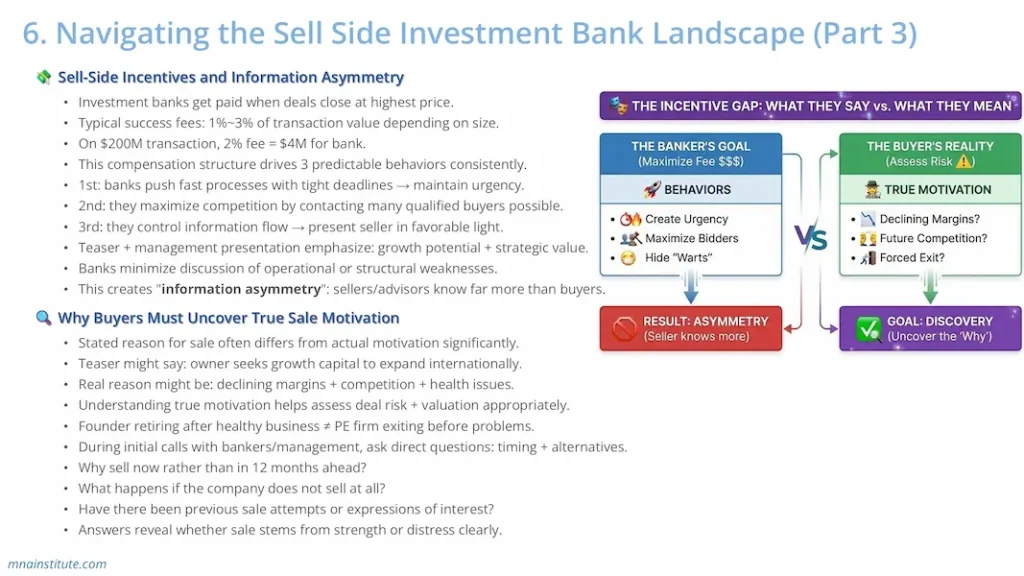
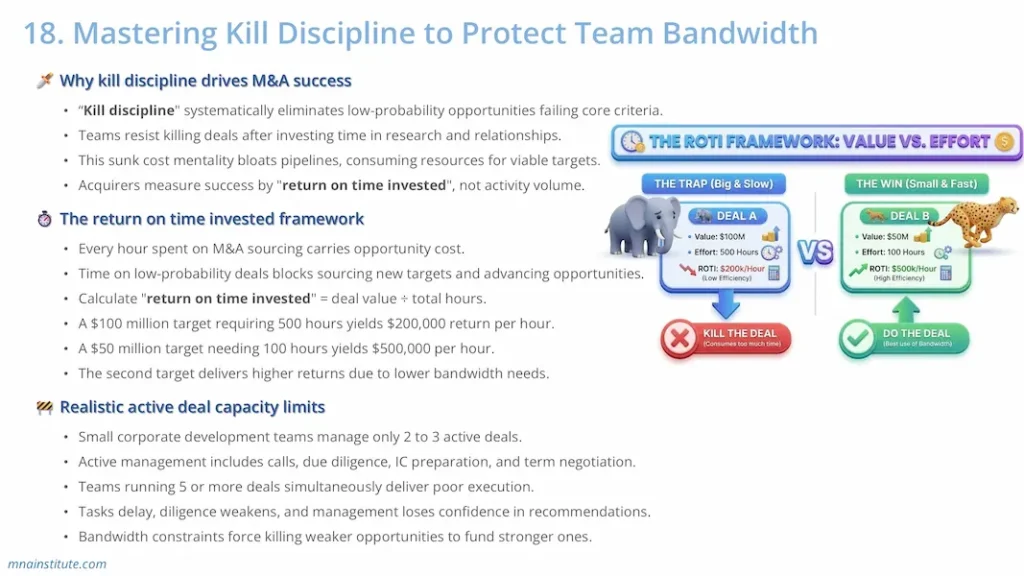
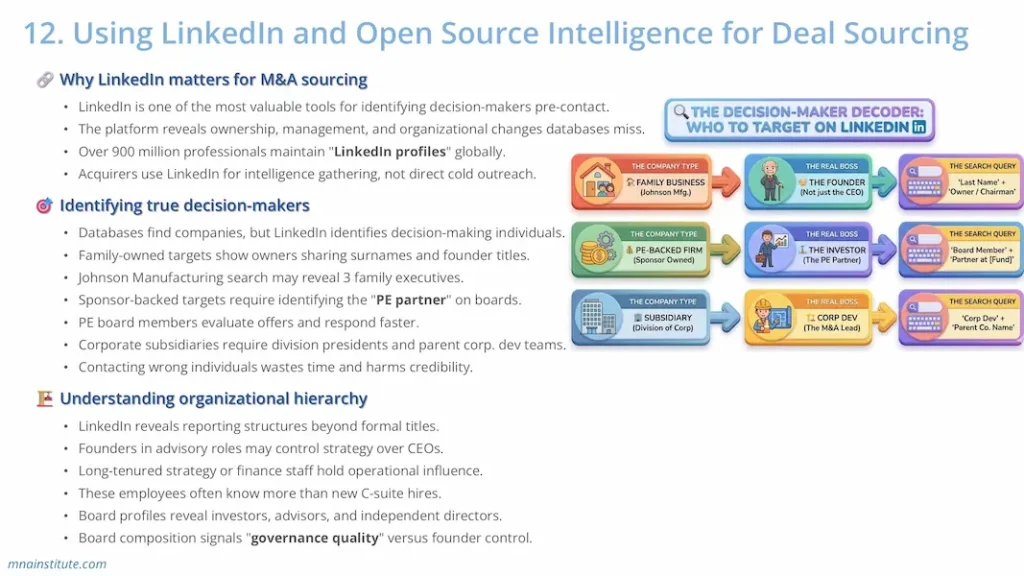
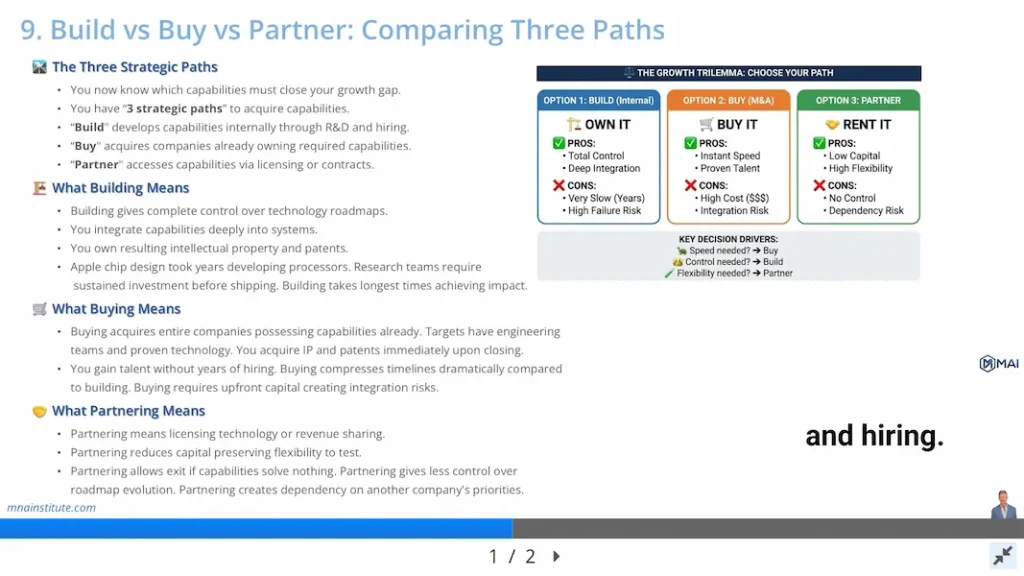
    Colorful diagrams translate abstract ideas into concrete visuals. This graphic reinforcement transforms difficult concepts into intuitive, friendly frameworks you can grasp instantly, turning complexity into clarity.

    # Bottom: Audio Narration with Real-Time Subtitles
    Live subtitles appear word-by-word as you listen. Adjust playback speed (0.5x to 2x) to match your learning pace. Fullscreen mode available for immersive focus.

  2. Practical Application Quizzes
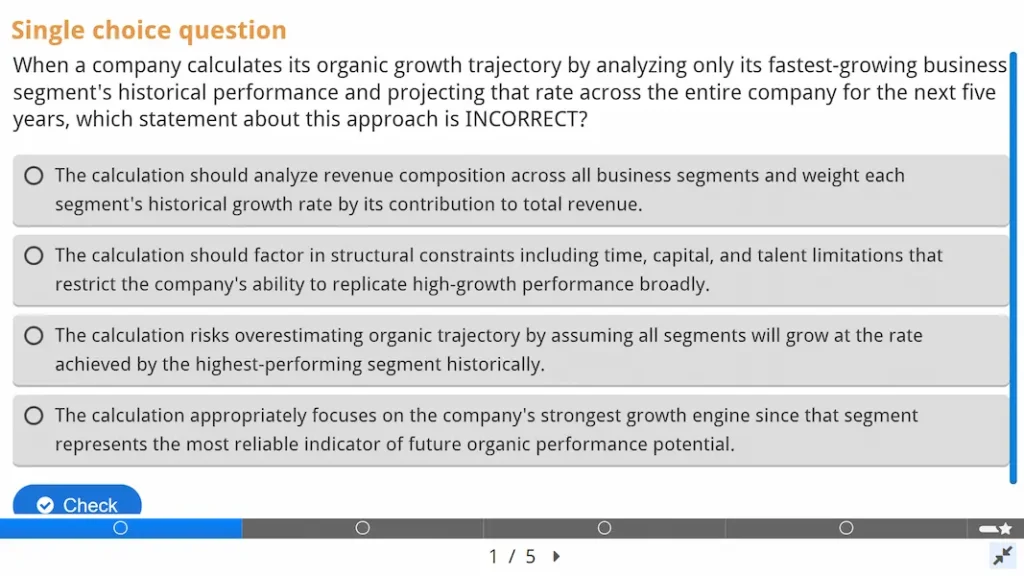
    What you learn in the lesson becomes yours through targeted quizzes. Each question is designed with real-world scenarios, testing not just knowledge, but your ability to apply these concepts in actual deal situations. You'll discover exactly how to use what you've learned in practice.
  3. Real-World Case Studies
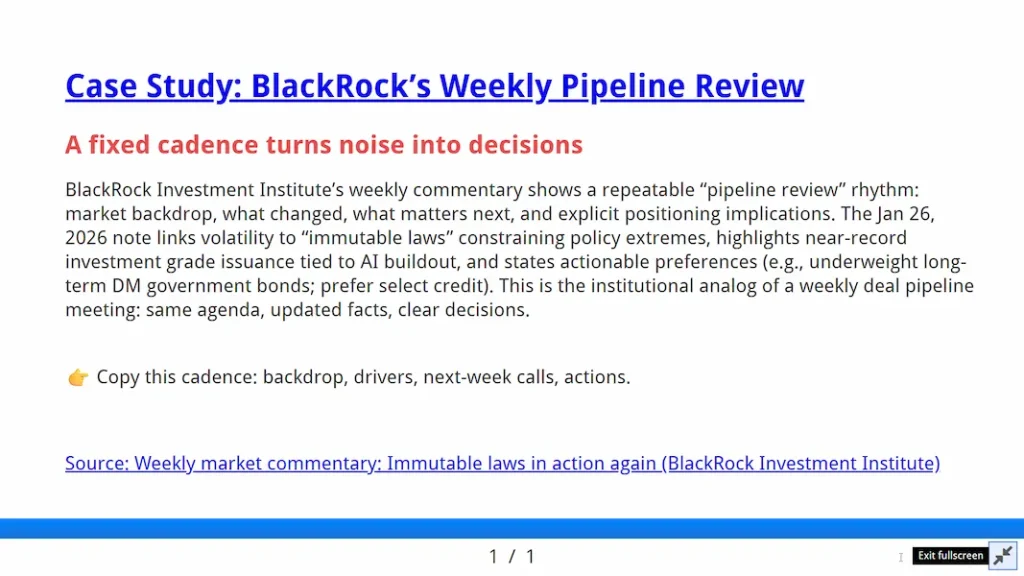
    See theory meet reality. Explore how major deals, from household-name acquisitions to landmark transactions, actually implemented these exact concepts. Learn from what worked, what failed, and why, bridging the gap between classroom and boardroom.

The result? You don't just understand M&A. You master it, step by step, with confidence.

Visual Examples of Our Learning Tools

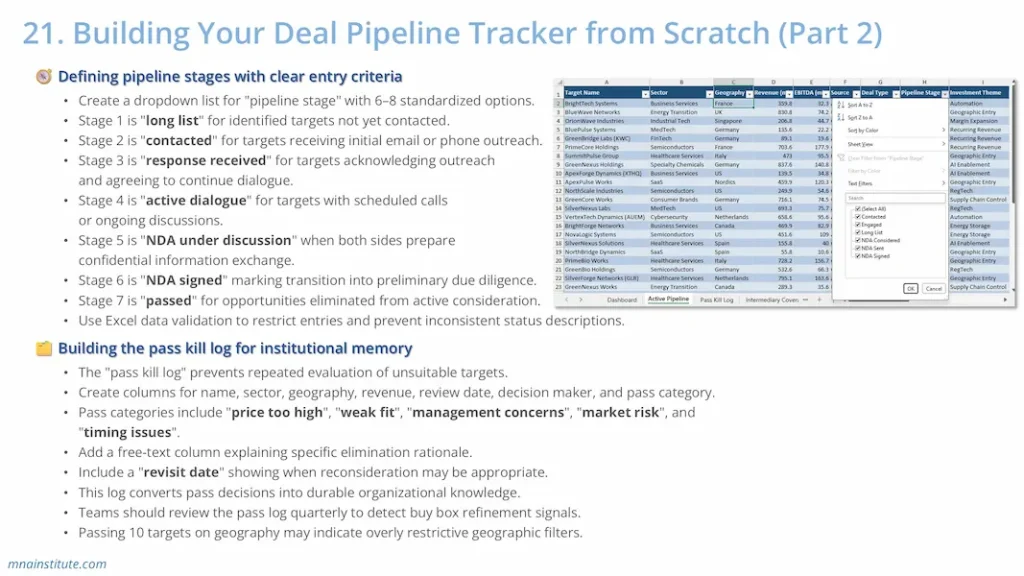
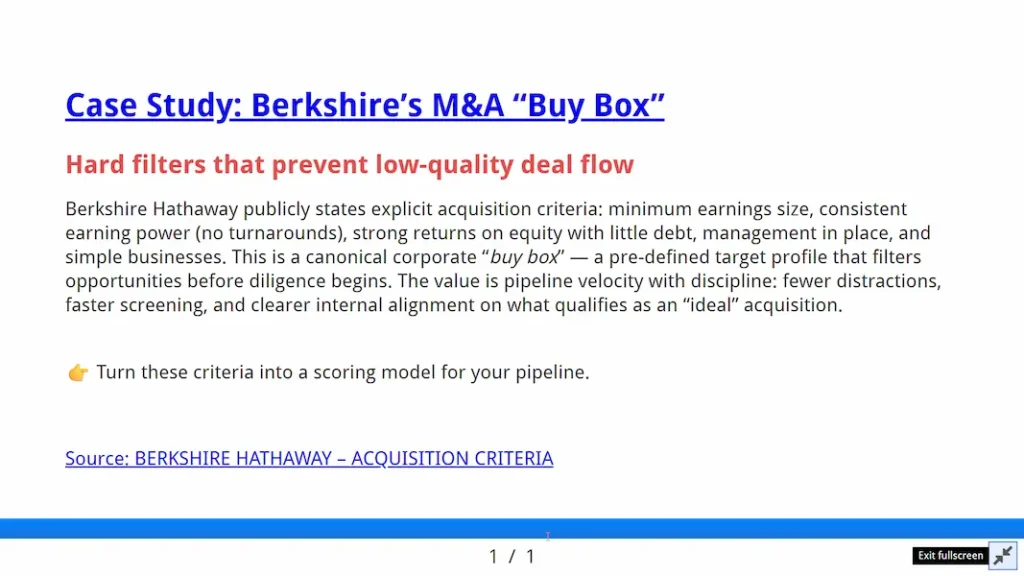
merger and acquisition strategies 1
merger and acquisition strategies 2
merger and acquisition strategies 3
merger and acquisition strategies 4
merger and acquisition strategies 5
merger and acquisition strategies 6
merger and acquisition strategies 7
merger and acquisition strategies 8

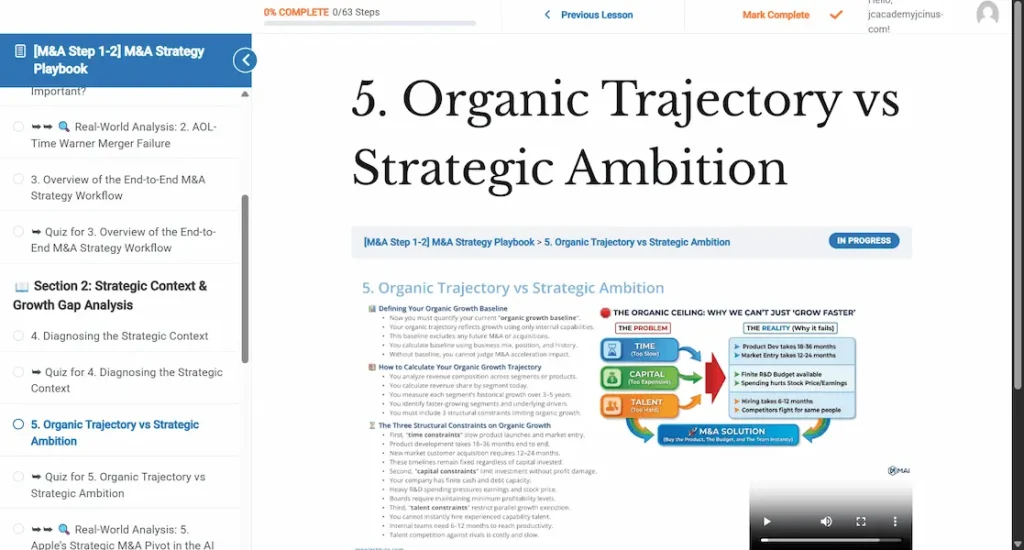
Sample Internal View of This Course

Detailed Course Curriculum

Complete Merger and Acquisition Strategies Mastery: 6 Sections → 25 Lessons → 56 Modules

This course walks through the complete M&A strategy development lifecycle used in Fortune 500 corporate development and Private Equity strategic planning.
Begin with Strategic Context & Growth Gap Quantification → advance through Build vs. Buy Assessment → progress to Investment Theme Design → master Target Screening Criteria → culminate in Execution Roadmap Development.
The curriculum mirrors the merger and acquisition strategies framework used by corporates, PE funds, and strategy consultants.
Each section builds strategic judgment through quantitative frameworks, decision gates, and case analysis.

Course Content

📖 SECTION 1: Introduction – Understanding M&A Strategy
➥➥ 🔍 Real-World Analysis: 2. AOL-Time Warner Merger Failure
3. Overview of the End-to-End M&A Strategy Workflow
➥ Quiz for 3. Overview of the End-to-End M&A Strategy Workflow
📖 Section 2: Strategic Context & Growth Gap Analysis
4. Diagnosing the Strategic Context
➥ Quiz for 4. Diagnosing the Strategic Context
5. Organic Trajectory vs Strategic Ambition
➥ Quiz for 5. Organic Trajectory vs Strategic Ambition
6. Quantifying the Growth Gap
➥ Quiz for 6. Quantifying the Growth Gap
7. The Strategic Implications of Doing Nothing
➥ Quiz for 7. The Strategic Implications of Doing Nothing
📖 Section 3: Build vs. Buy Assessment
8. Diagnosing the Deficit: Mapping Capability Gaps
➥ Quiz for 8. Diagnosing the Deficit: Mapping Capability Gaps
9. Build vs Buy vs Partner: Comparing Three Paths
1 of 4

Section Description

This course is structured into 6 applied sections:

Section I: Understanding M&A Strategy

● Define merger and acquisition strategy as a governance tool that prevents deal-driven decision-making
● Quantify the cost of pursuing acquisitions without strategic planning discipline
● Map the end-to-end workflow from growth gap analysis to execution roadmap
● Establish strategy as the foundation that precedes all target sourcing activity

Section II: Strategic Context & Growth Gap Analysis

● Diagnose the four structural triggers driving organic growth slowdown
● Calculate your organic growth trajectory using historical financial baselines
● Quantify the dollar gap between strategic ambition and organic capabilities
● Translate growth friction into M&A justification that persuades boards

Section III: Build vs. Buy Assessment

● Map capability gaps across technology, talent, distribution, IP, and geographic reach
● Compare build vs. buy vs. partner paths using speed, control, and risk tradeoffs
● Apply asset specificity threshold analysis to determine ownership requirements
● Build disciplined acquisition strategy by eliminating non-strategic deal opportunities

Section IV: M&A Focus Themes and Deal Patterns

● Design 2–3 investment themes that bridge strategy and deal sourcing
● Master seven deal archetypes: horizontal scale, vertical control, diversification, adjacencies, tech/talent, geographic entry, customer base expansion
● Analyze synergy blueprints and integration risks for each archetype
● Apply Coca-Cola Costa Coffee case to adjacent expansion M&A planning

Section V: Target Screening and Capital Guardrails

● Align target characteristics to investment themes using scorecard frameworks
● Define financial guardrails before target search: profitability, scale, unit economics
● Establish structural mandates and strategic red lines preventing value destruction
● Quantify available capital and optimize consideration mix across cash, stock, earnouts

Section VI: Execution Roadmap and Operating Capstone

● Design M&A governance architecture with clear decision rights and stage gates
● Convert merger and acquisition strategies into 30-60-90 day sourcing roadmaps
● Manage deal funnel dynamics from theme validation to target outreach
● Apply Cisco and Salesforce case studies to programmatic M&A execution

m&a strategy 1
m&a strategy 2
m&a strategy 3
m&a strategy 4

Real-World Case Studies

This course dissects landmark deals to provide actionable insights into strategic success and failure:

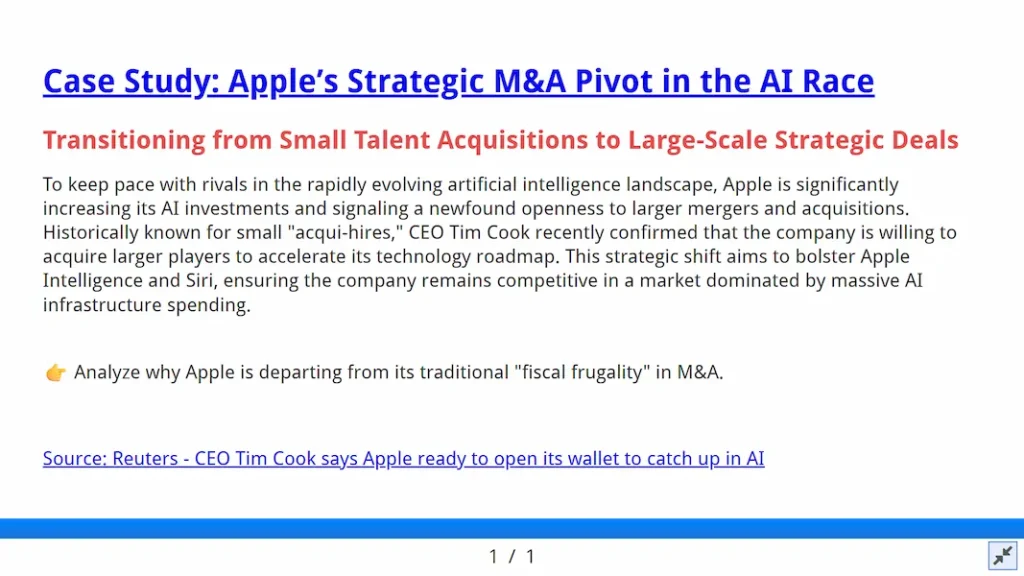
Apple's Strategic M&A Pivot in the AI Race
Analyze why Apple is departing from traditional "acqui-hire" tactics to pursue larger strategic acquisitions. Learn how competitive pressure from Microsoft, Google, and Amazon is forcing Apple to accelerate capability acquisition through merger and acquisition strategies rather than internal R&D.
Amazon-Anthropic Partnership Structure
Study why Amazon chose a $4B minority investment over full acquisition. Understand how strategic partnerships reduce capital risk while preserving flexibility, and when "partnering" beats traditional M&A planning in fast-moving technology sectors.
Coca-Cola's Acquisition of Costa Coffee
Examine a textbook adjacent expansion deal: how Coca-Cola leveraged distribution capabilities to enter the $200B global coffee market. Identify adjacency synergies, integration risks, and the "plug-and-play" PMI model for category expansion.
T-Mobile–Sprint Divestiture Ratio Analysis
Learn how regulatory approval requirements forced T-Mobile to divest Boost Mobile and other Sprint assets. Understand "divestiture ratio" as a practical KPI: the proportion of strategic value you must surrender to antitrust regulators, and how to stress-test synergy retention.
AOL-Time Warner $99B Write-Down
Dissect history's most disastrous merger. Analyze how overvaluation, cultural misalignment, and flawed synergy assumptions destroyed shareholder value, providing critical lessons on acquisition strategy failures at scale.
Cisco's M&A Machine Organizational Model
Discover how Cisco institutionalized M&A planning through dedicated teams, repeatable playbooks, and governance discipline, enabling 200+ successful integrations. Learn how to build acquisition strategy as an organizational capability, not a one-off transaction.
And 5 additional case studies

Your Course Deliverables

Board-Ready M&A Strategy Template
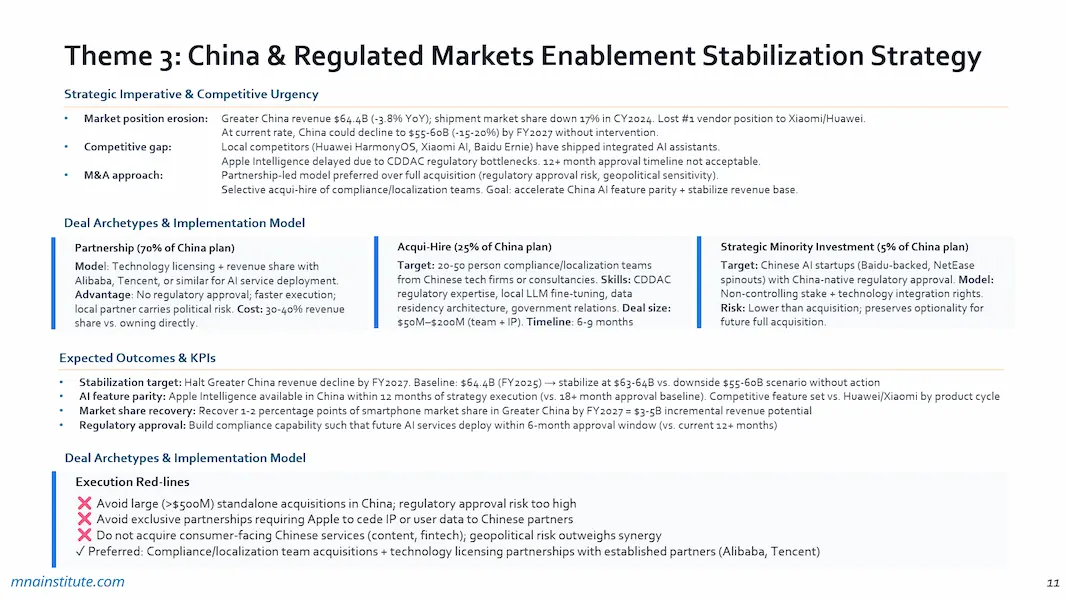
Upon completing this course, you'll create a professional merger and acquisition strategies document that investment committees actually use.

What You'll Build:

  1. Strategic Context Analysis
    • Growth gap quantification across revenue, EBITDA, and free cash flow
    • Organic trajectory modeling with structural constraint identification
    • Strategic ambition validation using board-approved growth targets
  2. Investment Theme Framework
    • 2–3 capability-led themes with clear strategic rationale
    • Deal archetype selection aligned to competitive positioning
    • Synergy blueprint and integration stance for each theme
  3. Target Screening Criteria
    • Financial guardrails: profitability thresholds, scale requirements, unit economics
    • Strategic fit scorecard: product, technology, geographic, regulatory alignment
    • Exclusion criteria preventing deal-driven opportunism
  4. Execution Roadmap
    • Governance architecture with decision rights and stage gates
    • 30-60-90 day sourcing plan converting strategy into action
    • Deal funnel management process from theme to target outreach

Real Deliverables, Not Theory
You'll master the exact M&A strategy structure that prevents "deal heat" from overriding strategic logic, protects capital allocation discipline, and forces rigorous build vs. buy justification at every decision gate.

AI-Powered Report Writing

Assignment: Nike Strategic M&A Mandate

In this capstone assignment, you will act as Chief Investment Officer at Nike, Inc., designing an merger strategy to regain market share lost to specialized competitors like On Running and Hoka.

You must navigate the complete strategy development process by:

  • Quantifying the growth gap between board targets and organic trajectory
  • Justifying build vs. buy logic despite Nike's massive R&D capabilities
  • Designing 2 investment themes using adjacent expansion or vertical integration frameworks
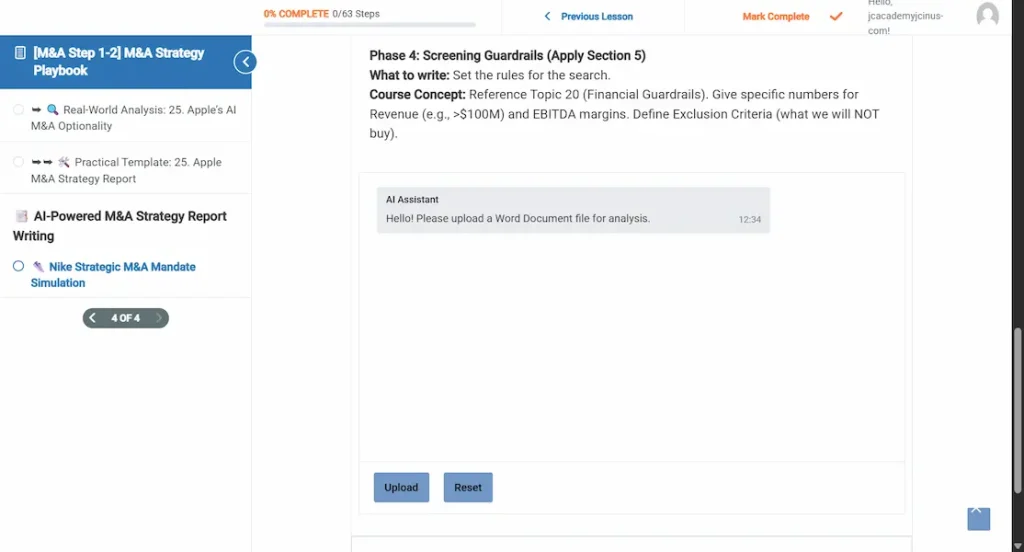
  • Setting financial guardrails for revenue scale, profitability thresholds, and exclusion criteria

Submit your strategy memo and receive instant AI feedback on growth gap quantification, theme rigor, and guardrail specificity!

What You Will Gain from This Course

Move beyond theory and execute Merger and Acquisition Strategies
using real decision frameworks, documents, and judgment applied in live transactions.

value creation

Master Strategic Growth Gap Quantification

Learn how to diagnose organic growth constraints and quantify the dollar gap between board ambition and current trajectory. You will check revenue, EBITDA, and FCF shortfalls using the exact methodology investment committees require, so you can justify merger and acquisition strategies with financial rigor.

Execute Build vs. Buy Assessments with Discipline

Develop the ability to map capability gaps and compare build, buy, and partner paths using speed, control, and risk tradeoffs. You will apply asset specificity thresholds to determine when ownership becomes mandatory, preventing deal-driven opportunism and protecting strategic capital allocation discipline.

Integration Risks

Design Investment Themes That Guide Deal Sourcing

Create 2~3 capability-led investment themes that bridge M&A strategy to target identification. You will master seven deal archetypes including horizontal scale, vertical integration, adjacent expansion, and tech acquisition, learning how to align synergy blueprints with integration stance for each archetype.

commercial due diligence

Build Target Screening Criteria and Financial Guardrails

Construct strategic screening funnels using product fit, geographic alignment, and regulatory constraints. You will define financial thresholds for revenue scale, profitability, unit economics, and exclusion criteria, ensuring merger strategy remains disciplined and prevents value destruction from misaligned targets.

due diligence process

Convert Strategy into Executable Sourcing Roadmaps

Learn how to design M&A governance architecture with clear decision rights and stage gates. You will translate merger and acquisition strategies into 30-60-90 day sourcing plans, manage deal funnels from theme validation to target outreach, and establish weekly cadence for programmatic M&A execution.

AI-Powered Simulations

Apply Strategic Judgment via AI Report Writing

Practice M&A strategy development in an AI-driven assignment where you design Nike's turnaround merger strategy with real financials and competitive constraints. You receive instant feedback on growth gap quantification, theme rigor, and guardrail specificity to sharpen strategic judgment safely and repeatedly.

From strategic context → capability assessment → investment themes → target screening → execution roadmap:
This course trains you to build merger and acquisition strategies with repeatable, professional discipline.

Commit to 2~3 hours a week. In 3 months, you will think and execute like a Corporate Development strategist.
MAI Team

Who Made This Course?

Built by the M&A Institute team, where real deal experience meets training design.

This merger and acquisition strategies course was architected by experts with over 10~20 years of combined experience in M&A, Private Equity, and Corporate Strategy.

Bridging the gap between strategic M&A planning of Corporate Development and the execution rigor of Investment Banking, we have translated the actual decision-making frameworks of deal strategists into a practical, rigorous curriculum.

Content Built on Battle-Tested Experience
● Our curriculum is derived from actual experience in Cross-border M&A, Venture Capital, Corporate Buyouts, IPOs, and Mezzanine Financing.
● We utilize the exact analysis frameworks, modeling templates, and decision matrices used by CFA/MBA professionals in top-tier firms.
● The content is verified by practitioners in New Business Strategy, Corporate Finance, Research Centers, IB Divisions, and PE Teams.
● Our instructors have delivered over 200 corporate training sessions to global firms and financial institutions, educating over 8,000 professionals.
 
What Our Corporate Clients Say:
Practical, insightful, and engaging M&A training that exceeded our expectations. The PMI module was particularly valuable for our team's execution capabilities.

H Group

The training helped me transition from early-stage startup investment to M&A. The practical knowledge and insights from the post merger integration process were invaluable.

S Group

Excellent course with high satisfaction and practical value. Highly recommended for any professional involved in the post merger acquisition lifecycle.

L Chemical

The M&A Institute Difference

● We don't just teach theory; we follow the narrative arc of strategic M&A planning. The curriculum mirrors the actual flow of strategy development, making complex concepts intuitive.
● We use visually structured scripts and infographics to make dense strategic and financial concepts accessible to non-specialists.
● Experience a logical, unbroken learning flow: Context → Assessment → Themes → Screening → Execution.

Our Training Philosophy

"Great training translates complex theory into immediate field capability."

The goal of this merger and acquisition strategies course is not just knowledge transfer.
It is to equip you with the templates, frameworks, and judgment required
to quantify growth gaps, design investment themes, and build acquisition strategies effectively from Day 1.

Our Book

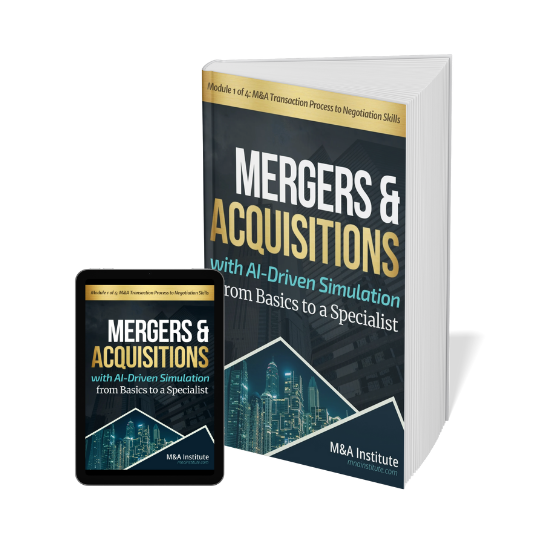
Mergers & Acquisitions with AI-Driven Simulation from Basics to a Specialist

This book is a comprehensive guide, refined from over a decade of offline M&A training delivered to top corporations such as Samsung, LG, Hyundai, and SK Group. Unlike traditional M&A texts, it systematically bridges theory and real-world practice, equipping readers with actionable insights and strategic tools essential for success.

The standout feature of this book is its exclusive AI simulation exercises. After each part (a total of 5 parts), readers engage in persona-based simulations powered by ChatGPT, enabling them to apply learned concepts in realistic environments. This unique learning experience ensures mastery of complex M&A transactions and positions readers as capable professionals in the field.

By completing this book, you will gain the skills and confidence needed to become an M&A Specialist, ready to lead complex transactions with expertise.

m&a transaction process to negotiation skills

Frequently Asked Questions

For Teams

Train Your Team on a Unified Framework

This merger and acquisition strategies course is available for team-based enrollment, allowing organizations to build a shared strategic language and planning discipline across corporate development, strategy, and finance teams.
 
Why Teams Choose This Program
✓ A proven online curriculum covering the full evelopment process, from context to execution
✓ Consistent learning experience across departments, geographies, and seniority levels
✓ Cost-effective group pricing compared to in-person training programs
✓ Flexible online access, enabling teams to learn without time or location constraints

Name
Shopping Cart
Scroll to Top