Basic Company Valuation Course Structure
A Practical Learning Flow Built for Valuation Judgment

How the Course Is Structured

Differentiated Learning Materials

AI-Powerd Simulation
Our Learning Interface
Basic Company Valuation Made Structured, Visual, and Practical
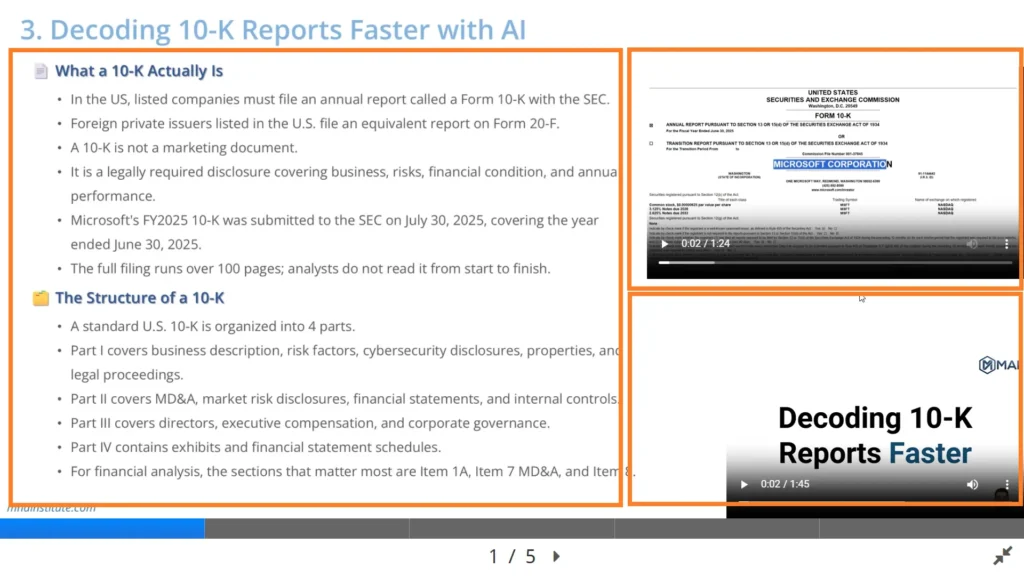
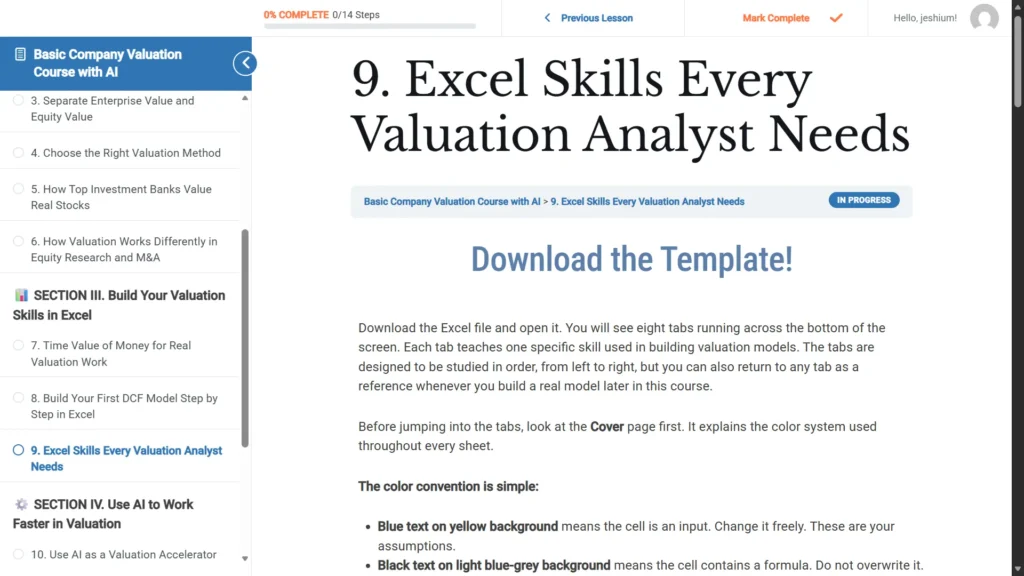
Our learning UI and UX is engineered to transform technical valuation concepts into intuitive business judgment.
- Scientifically Designed 3-Layer Interface
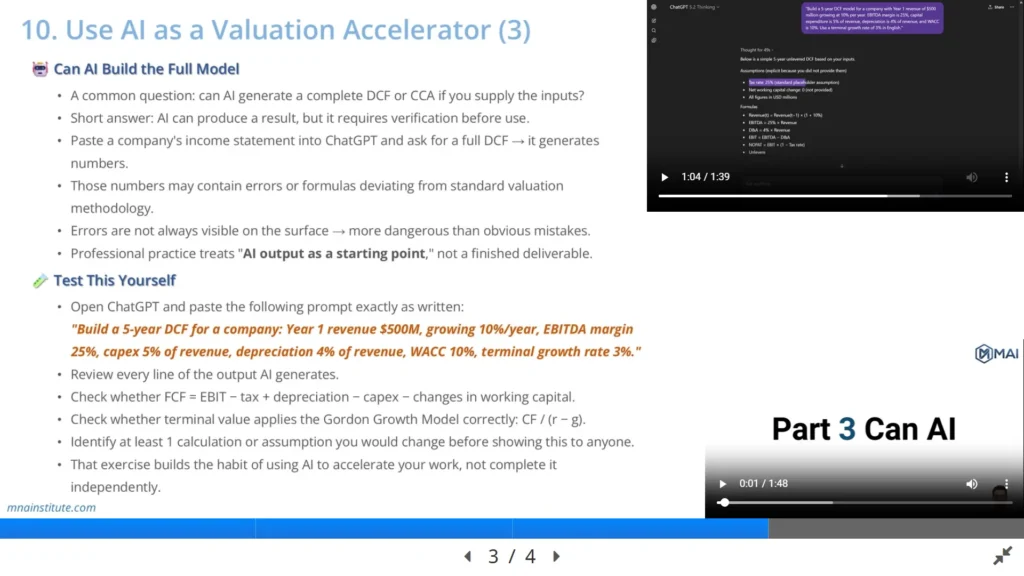
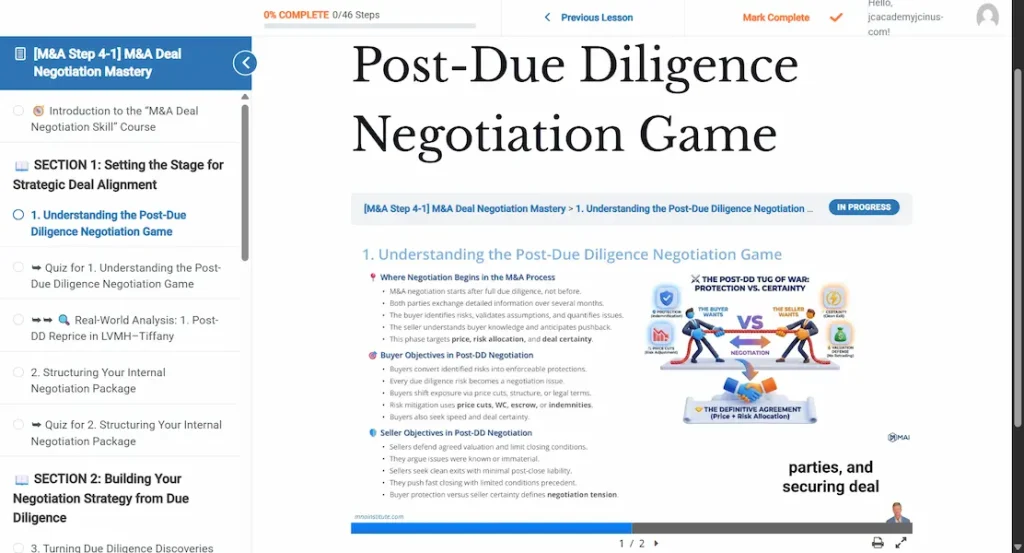
Every lesson follows a three-layer learning structure designed to help learners understand valuation concepts quickly and intuitively.
-
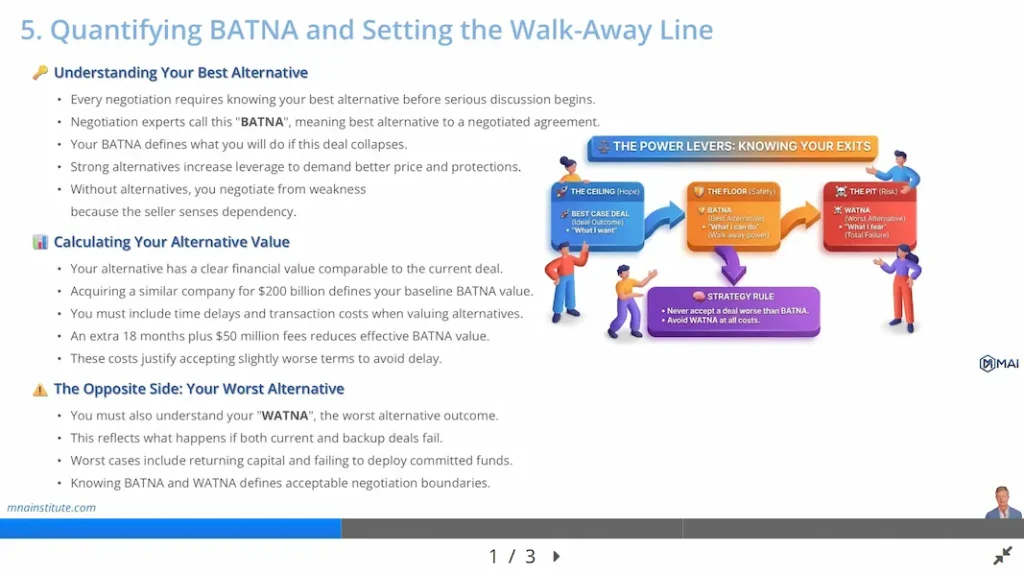
# Left Panel: Structured Written Content
Carefully edited bullet points guide you through each concept with clarity. Even reading the text alone gives you the full learning logic. As the audio plays, your eyes naturally follow along, reinforcing understanding through synchronized reading and listening.-
# Right Panel: Visual Infographics or Workflow Demonstrations
Visual diagrams translate abstract valuation ideas into concrete analytical frameworks. Enterprise value, equity value, DCF logic, comparable multiples, and discounting become easier to understand when each concept is shown visually. This graphic reinforcement turns basic company valuation into a clear sequence of decisions rather than a collection of formulas.
-
# Bottom: Audio Narration with Real-Time Subtitles
Live subtitles appear word-by-word as you listen. Adjust playback speed (0.5x to 2x) to match your learning pace. Fullscreen mode available for immersive focus.
- -
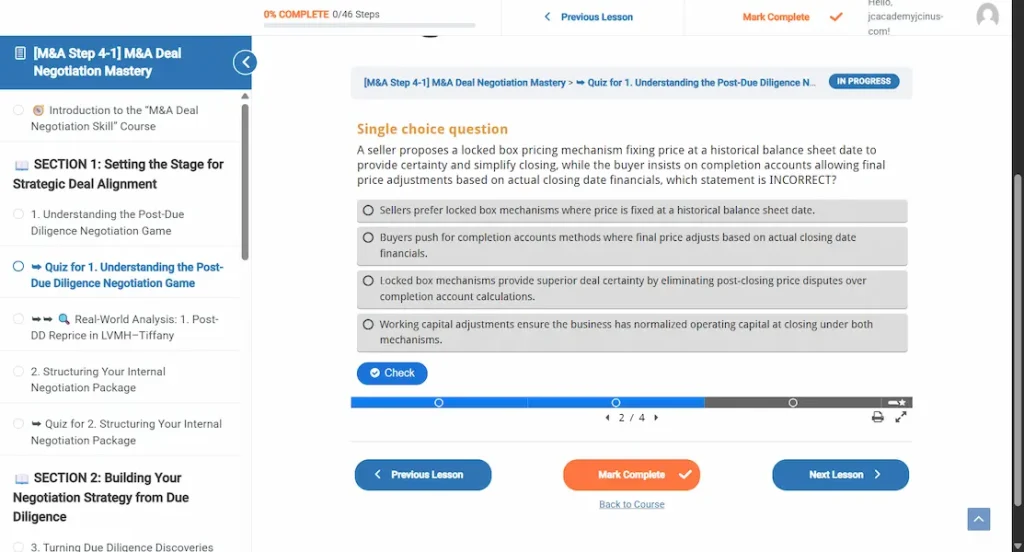
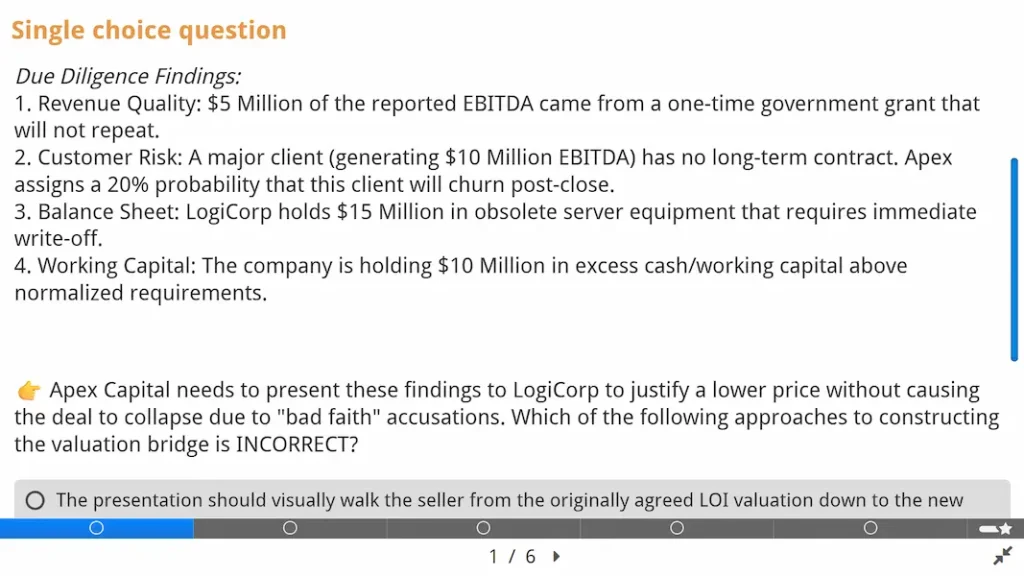
Practical Application Quizzes
What you learn in the lesson becomes yours through targeted quizzes. Each question is designed with real-world scenarios, testing not just knowledge, but your ability to apply these concepts in actual deal situations. You'll discover exactly how to use what you've learned in practice.-
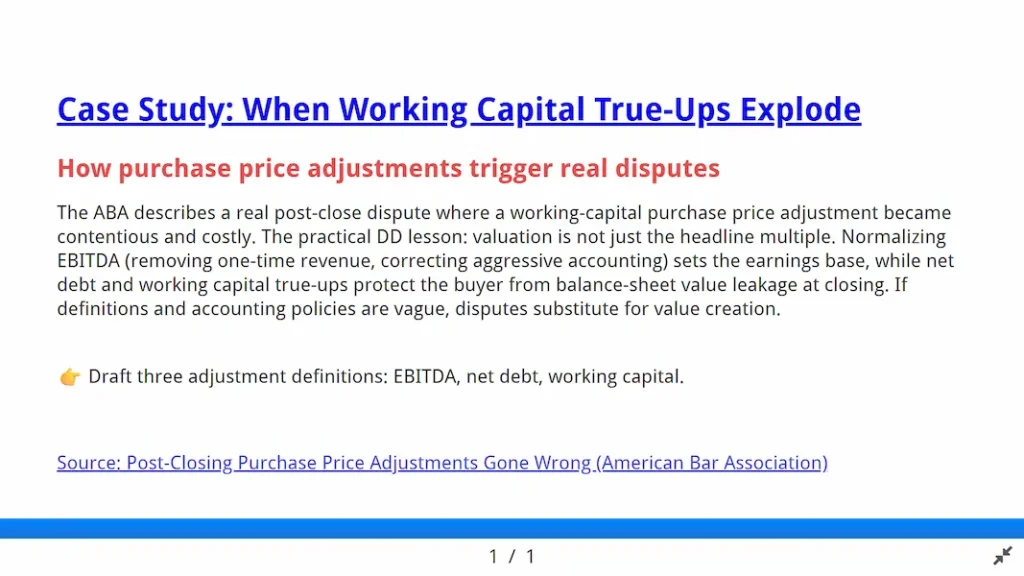
- Applied Financial Analysis Tasks
The applied tasks move the valuation fundamentals course beyond passive learning. You compare analyst reports, reconstruct a target price, test DCF sensitivity, and use AI prompts to check whether outputs can be trusted. The result is a practical basic company valuation workflow that helps you think like an analyst before moving into full financial modeling and valuation work.
The result? You do not just understand basic company valuation.
You apply it, step by step, with confidence.
Course Content
Section I. The One Principle Behind Every Investment Decision
- Understand why professional investors separate value from price before committing capital, and how markets move on that disagreement
- Calculate investment returns with and without dividends using the standard return formula across holding periods
- Recognize the real situations that demand a formal valuation: listed stocks, M&A negotiations, IPOs, and startup funding rounds
-
Section II. Build Your Valuation Toolkit from the Ground Up
- Separate enterprise value from equity value using the EV bridge formula and convert between the two with full precision
- Choose the right valuation method — DCF, DDM, NAV, or relative valuation — based on company type, stage, and data availability
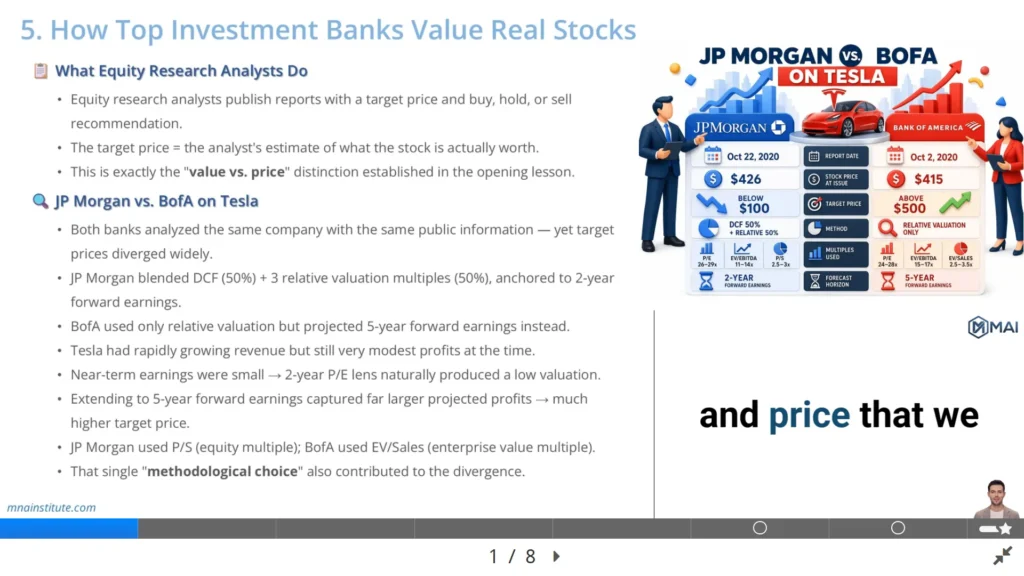
- Apply the IB approach to real stocks and understand how equity research and M&A valuation differ in output, method, and purpose — the foundation of any valuation methods course
-
Section III. Build Your Valuation Skills in Excel
- Master time value of money: present value, discount rates, perpetuity, Gordon Growth Model, and NPV across multiple cash flows
- Build your first complete two-stage DCF in Excel from projected free cash flow to enterprise value using a SaaS case study
- Develop the Excel foundations every valuation analyst needs: number formats, XNPV, IRR, INDEX/MATCH, goal seek, and audit tools
-
Section IV. Use AI to Work Faster in Valuation
- Use AI to compare analyst reports on the same stock, extract target prices, and identify which single input drives the largest valuation gap
- Master prompt engineering rules for financial modeling: structured prompts, 4-stage chains, error patterns, and output verification
- Build a reusable prompt library across the full basic company valuation workflow — from EV calculation to final target price
-
Section V. AI-Powered Simulation
- Apply all 13 lessons in one structured valuation simulation.
- You act as Corporate Development Analyst at Apex Industrial Systems, a legacy manufacturer evaluating NeuralDrive AI, a fast-growing automation software target.
- The seller argues that NeuralDrive deserves a high valuation because it brings AI capability, recurring software revenue, and strategic transformation potential.
- Your job is to decide whether that claim is supported by valuation logic.
- Across 8 progressive scenarios, you must move from basic company valuation to practical investment judgment.
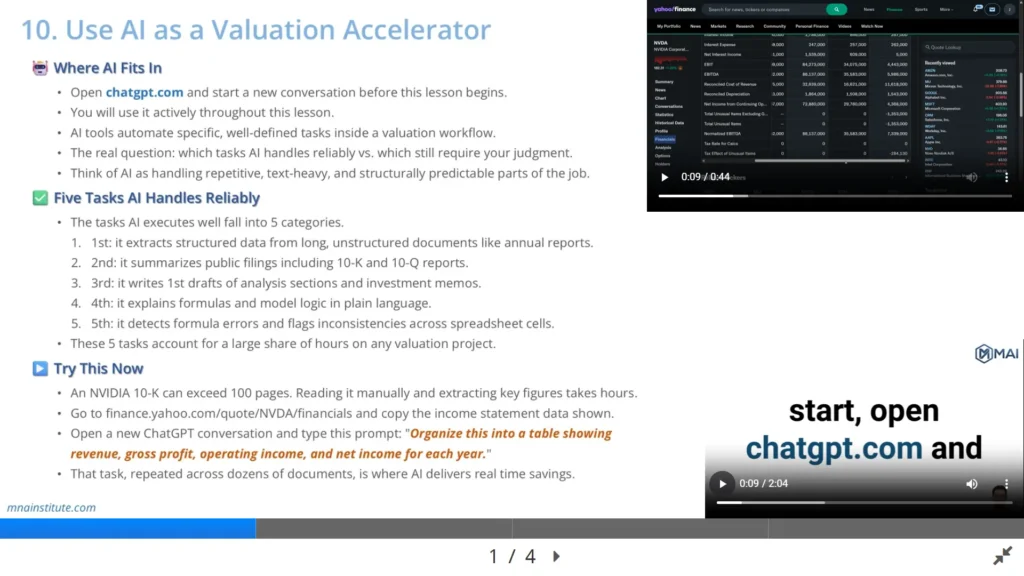
Applied AI Prompting and Tasks
This basic company valuation course applies AI across data extraction, valuation method selection, DCF review, and analyst interpretation.
- Comparing Analyst Reports with AI
Use AI to compare two equity research reports on Alphabet, extracting target price, method, multiple, and forecast horizon.
- - Reconstructing a Target Price
Recalculate a published target price using forward EPS and P/E multiple, then test how the output changes when the forecast year changes.
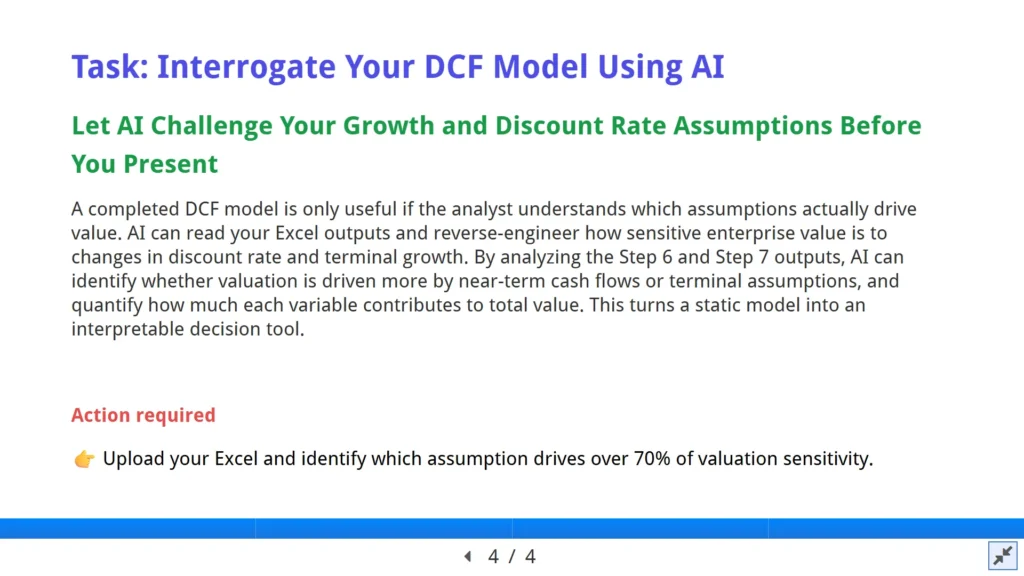
- - DCF Sensitivity Review
Use AI to interpret your DCF sensitivity table and identify whether enterprise value is driven more by discount rate or terminal growth.
- - Filing and Data Extraction
Use structured prompts to extract revenue, operating income, operating cash flow, CapEx, and free cash flow from source documents.
- - Formula and Model Review
Ask AI to explain valuation formulas, detect hardcoded values, and flag inconsistencies before they enter a final model.
- - Output Interpretation
Convert model results into a clear valuation narrative while verifying every number against the source or spreadsheet.
Your Course Templates
3 Professional Templates in This Basic Company Valuation Course
What You Will Apply in This Basic Company Valuation Course
-
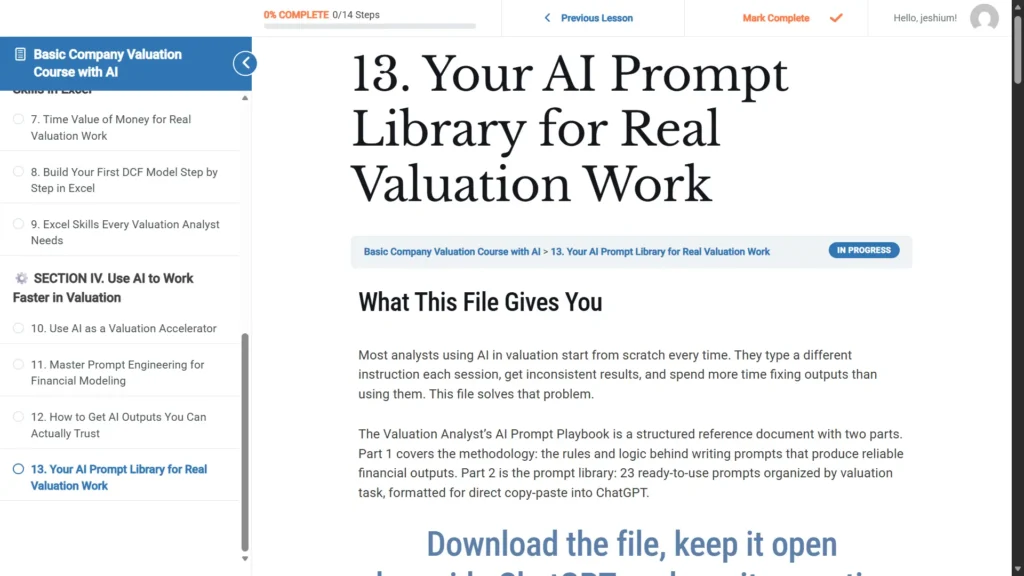
1. TVM to DCF Excel Model
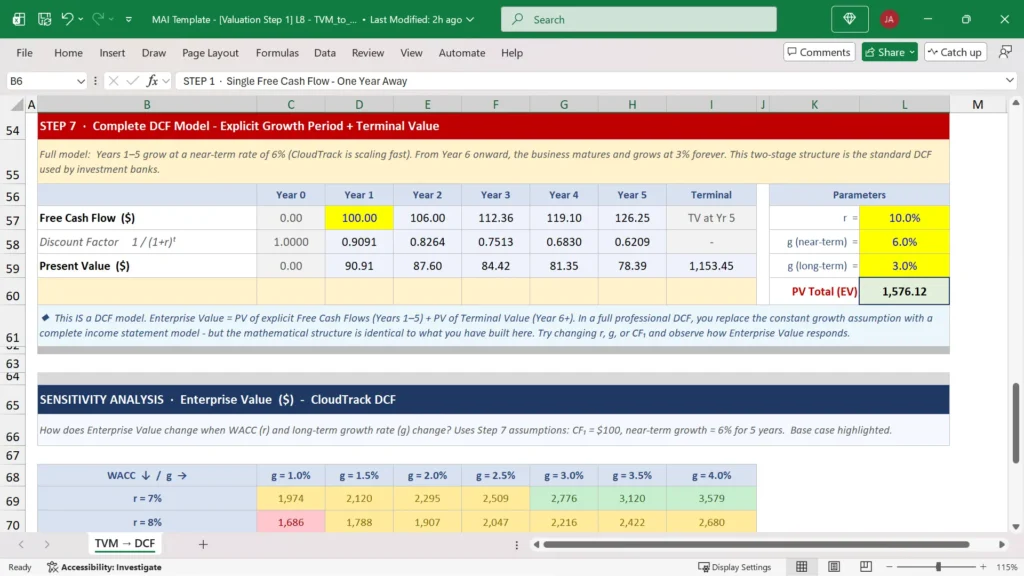
Seven-step progression from a single cash flow to a complete two-stage DCF model using the CloudTrack SaaS case study. Steps move from single-year discounting through NPV, perpetuity, Gordon Growth, five-year explicit period with terminal value, and a full two-stage DCF — with discount rate and growth inputs you control directly.
-
2. Excel Foundations for Valuation
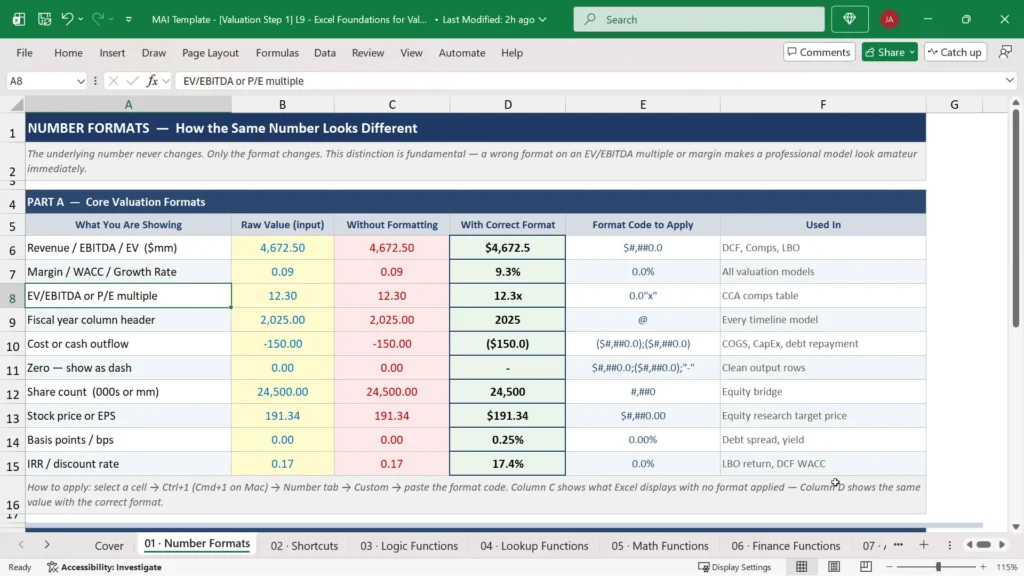
Seven-sheet workbook covering the Excel skills every valuation analyst uses daily: number formats for revenue, multiples, and rates; keyboard shortcuts for model speed; IF and IFERROR for robust formulas; INDEX/MATCH for comps tables; SUMPRODUCT for WACC; NPV, PV, IRR, XNPV, and XIRR for DCF work; and audit tools including trace, goal seek, and show formulas — all applied to a live CloudTrack financial model.
-
3. Valuation Analyst's AI Prompt Playbook
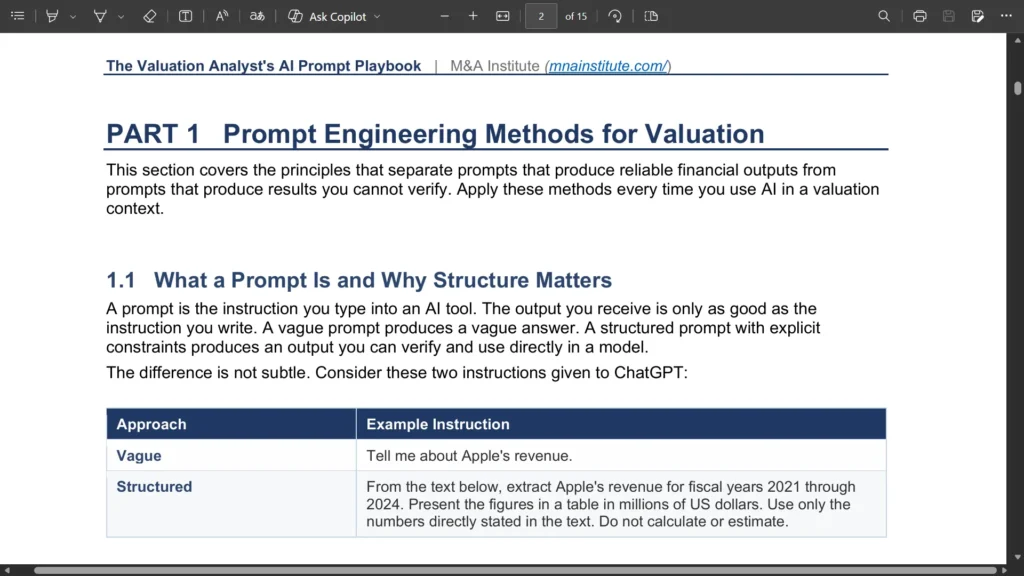
Prompt engineering framework with four rules every finance prompt must follow, a four-stage chain that prevents compounding errors, and a ready-to-use prompt library organized by valuation task across DCF, comparable company analysis, and analyst report reconstruction — the working reference for business valuation basics applied with AI on any public company.
--
You will leave with the exact analyst workflow that converts market prices and public filings into structured valuation judgment, replacing manual guesswork with disciplined AI-assisted execution at every stage of this valuation fundamentals course.
AI-Powered Basic Company Valuation Practice
AI Simulation - Basic Company Valuation Deal Lab
This is an AI-powered simulation where each scenario places you under investment committee review. You are evaluating NeuralDrive AI, a growth-stage software target being marketed as a strategic AI acquisition. The seller claims the business deserves a premium because it combines AI capability, growth optionality, and future automation demand. You must decide whether that claim survives disciplined valuation analysis.
You will work through 8 decision points by:
- Separating value from price.
- Identifying whether the valuation output is enterprise value or equity value.
- Selecting the most appropriate valuation method for the company stage.
- Testing DCF sensitivity to WACC and terminal growth.
- Comparing DCF logic with market-based valuation multiples.
- Using AI prompts to extract, calculate, verify, and interpret financial data.
- Challenging AI outputs that lack source citation or formula consistency.
- Recommending whether the buyer should pay a premium, reduce the offer, request more evidence, or walk away.
This is the final bridge between a valuation fundamentals course and real analyst execution.
It turns basic business valuation from a concept into a repeatable decision process.
Sample Internal View of The Course
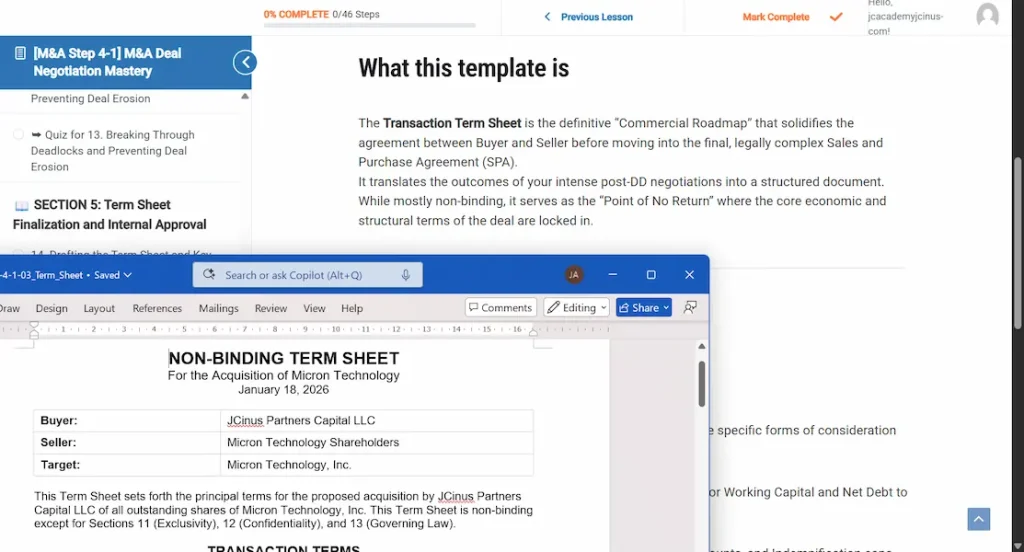
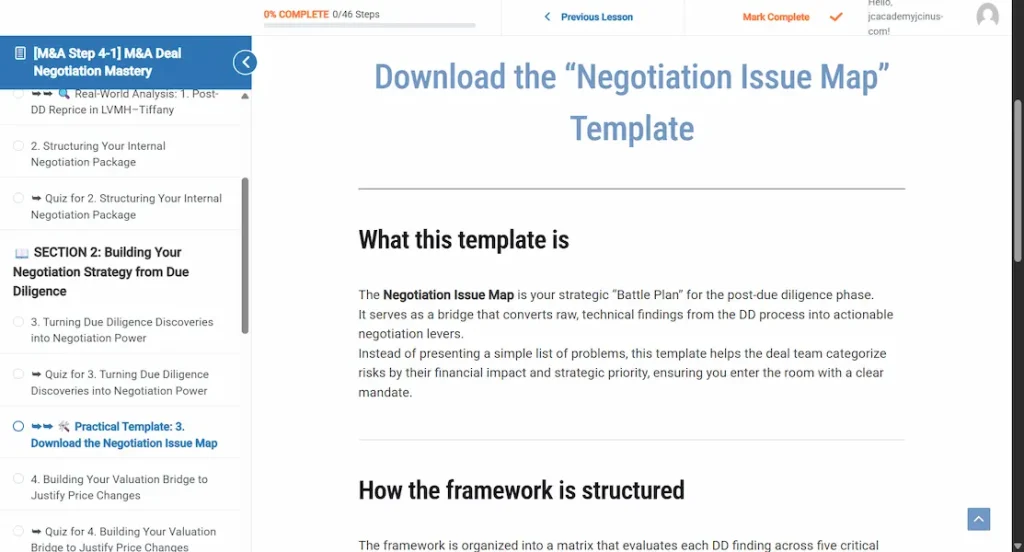
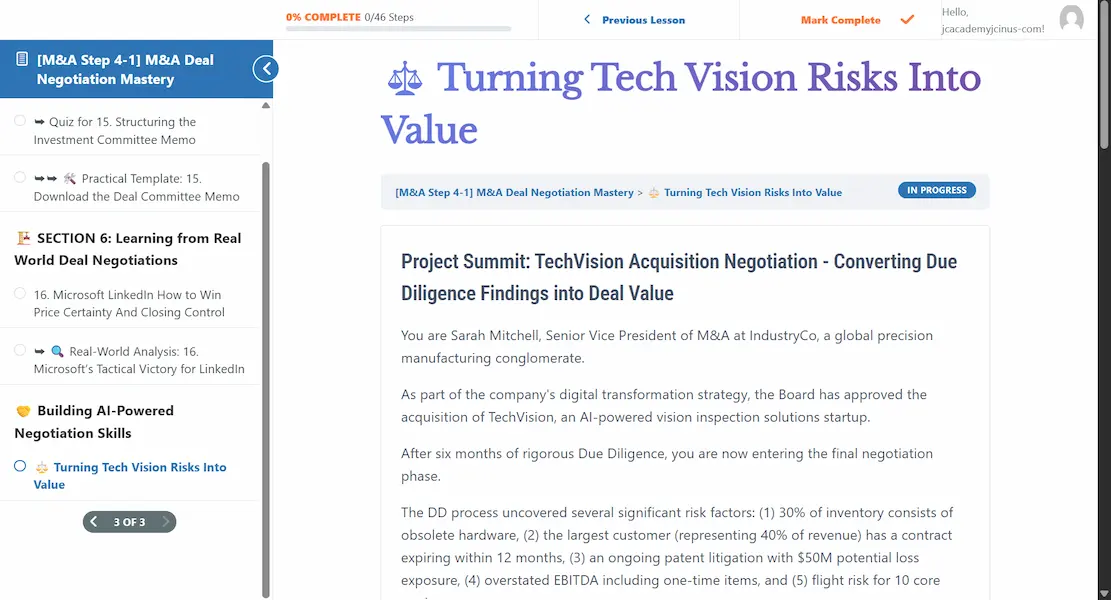
Visual Examples of Our Learning Tools
The images shown below are from another course and are included for reference only.
What You Will Gain from This Course
This basic company valuation course trains you
to judge price, value, methods, Excel logic, and AI outputs with analyst-grade discipline.

Distinguish Value from Price Across Any Investments
Build the ability to judge whether a stock price, offer price, or target price is reasonable. You will know how value differs from price, why valuation is a range, and when a market price deserves challenge.

Match the Right Valuation Method to Any Company
Identify when to use DCF, relative valuation, P/E, EV/EBITDA, EV/Sales, DDM, NAV, or VC-style methods. You will match each method to company stage, data quality, investor purpose, and transaction context.

Calculate EV and Equity Value with Precision
Understand the bridge between EV (Enterprise Value), equity value, debt, cash, minority interest, and preferred stock. You will avoid one of the most common basic business valuation mistakes before building any model.

Build a Two-Stage DCF Model in Excel
Move from present value to perpetuity, terminal value, discount rate, growth rate, and sensitivity analysis. You will understand what Excel is calculating before trusting a green output cell or headline valuation.

Apply AI to Valuation Without Losing Analyst Judgment
Apply AI to extract filings, compare reports, explain formulas, and review valuation logic efficiently. You will know which outputs save time and which require source checks, formula checks, and analyst judgment.

Convert Valuation Basics into Decisions
Practice the valuation fundamentals course content through tasks, templates, and simulation under realistic review pressure. You will turn raw assumptions into defensible investment, M&A, IPO, and funding conclusions.

Who Made This Course?
Built by the M&A Institute team, where real finance experience meets training design.
This financial statement analysis course was architected by experts with over 10 to 20 years of combined experience in M&A, Private Equity, Corporate Finance, Valuation, and Corporate Strategy.
Bridging the gap between financial statement analysis training and real investment decision-making, we have translated the actual analytical frameworks of finance professionals into a practical, rigorous curriculum.
Content Built on Battle-Tested Experience
● Our curriculum is derived from actual experience in Cross-border M&A, Venture Capital, Corporate Buyouts, IPOs, and Mezzanine Financing.
● We utilize the exact analysis frameworks, Excel templates, and decision logic used by CFA/MBA professionals in top-tier firms.
● The content is verified by practitioners in New Business Strategy, Corporate Finance, Research Centers, IB Divisions, and PE Teams.
● Our instructors have delivered over 200 corporate training sessions to global firms and financial institutions, educating over 8,000 professionals.
What Our Corporate Clients Say: